At a glance
-
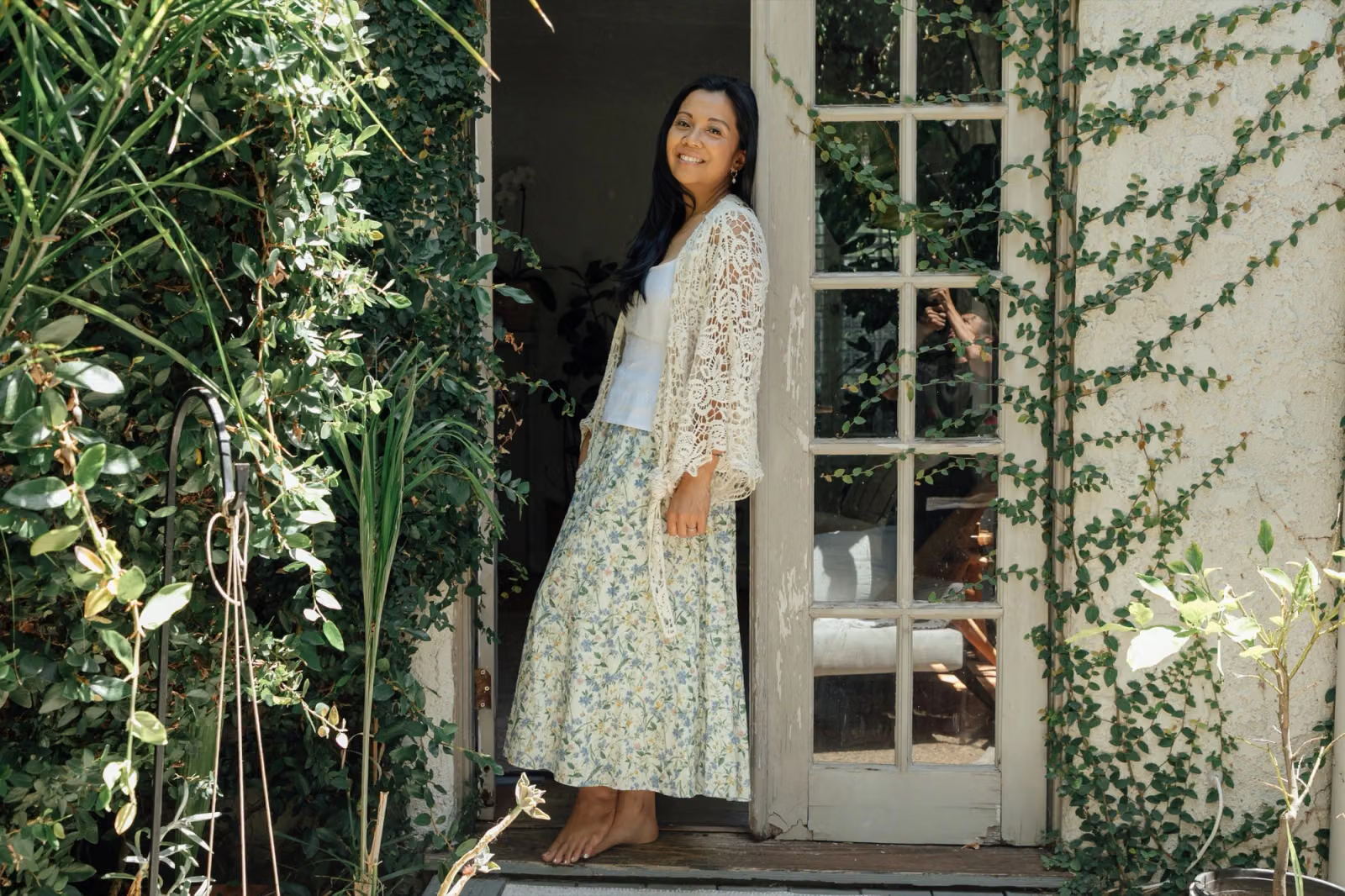
Function member: Jaclyn, member since 2023
-
Function focus: Heart Health, Hormones, Biological Age
A beach day that changed her life
It was an ordinary afternoon on the beach.
Jaclyn and her husband were laughing and playing with their dog when he reached over to tickle her.
His hand stopped when he felt a small lump under her right breast.
A whirlwind of testing followed: an ultrasound, mammogram, MRI, and biopsy.
Then two words that split her life into before and after.
Breast cancer.
It all happened so fast.
Healing became the work
At the time, Jaclyn was in her early 30s and a concierge physician in Miami Beach.
She saw patients from early morning until late at night, weekends and holidays included. She believed she was living the career she'd always wanted.
Chronic fatigue was one of the only symptoms she remembers before her diagnosis.
She had ignored it.
Now, Jaclyn suddenly had to make decisions about surgery, chemotherapy, and the future she imagined for herself.
She ultimately chose a double mastectomy.
She pursued fertility treatment in the hopes of still being able to have children someday.
There was devastating hair loss. Early menopause. And years of recovery.
It became a full-time job just focusing on healing.
Looking for the "why"
As grateful as she was for her medical team, Jaclyn couldn't shake one question.
Why did this happen?
Traditional medicine helped treat her cancer.
But after treatment, she wanted to understand how she could better protect her health moving forward.
That search changed the course of her career.
She eventually shifted her practice toward functional and integrative medicine.
I wanted to help people understand the root cause of why they get sick.
Measuring her health
Years later, Jaclyn became one of Function's early members.
She'd long believed routine testing only scratched the surface.
The number of tests that are done to help set a basic foundation for someone's health is probably a fraction of what I personally feel we need to really understand somebody's body.
For Jaclyn, Function wasn't about finding something wrong.
She'd already lived through the version of medicine that discovers problems after they've become emergencies.
This was about continuing to measure the health she'd spent the last decade rebuilding.
A deeper understanding
When her results came back, there weren't any major surprises.
Most of her biomarkers reflected years of intentional choices around sleep, nutrition, movement, and stress management. But the deeper value was in seeing how those pieces connected—not just whether each one fell in a normal range.
One number did stand out: at 44 years old, Function estimated her Biological Age at 26.8—nearly 17 years younger than her chronological age.
I was really pleased to see that.
But the biological age number wasn't the point. It was the deeper, fuller picture of her health—and the data that could help inform how she cares for her body over time.
It reinforced that I'm on the right path.

"How lucky am I?"
Before cancer, Jaclyn believed longevity meant living as long as possible.
Now, her definition has changed.
It's about having the energy to play with her son. To keep practicing medicine.
To protect her brain, her body, her purpose.
I don't want my son to see health as something we obsess over. I want him to see it as something we build with joy.
That's the same lens she brings to testing.
Rather than waiting for symptoms to tell us something is wrong, she believes in using health data as an empowering tool for understanding the body earlier and more deeply.
How lucky are we to have access to this kind of information about ourselves?