At a glance
-
LDCT is the only USPSTF-recommended screening approach for high-risk lung cancer.
-
Eligibility: ages 50–80, 20+ pack-year history, currently smoking or quit within 15 years.
-
Most eligible people still aren't getting screened—awareness and access are major barriers.
Many cancers don't announce themselves early. Lung cancer is no different—it often develops quietly, without specific signs or symptoms, until it reaches a more advanced stage. That's exactly why screening matters. For people at elevated risk, an annual, low-dose CT (LDCT) scan of the lungs can give your doctor a clearer picture. And earlier findings could mean more options.
What lung CT screening actually is
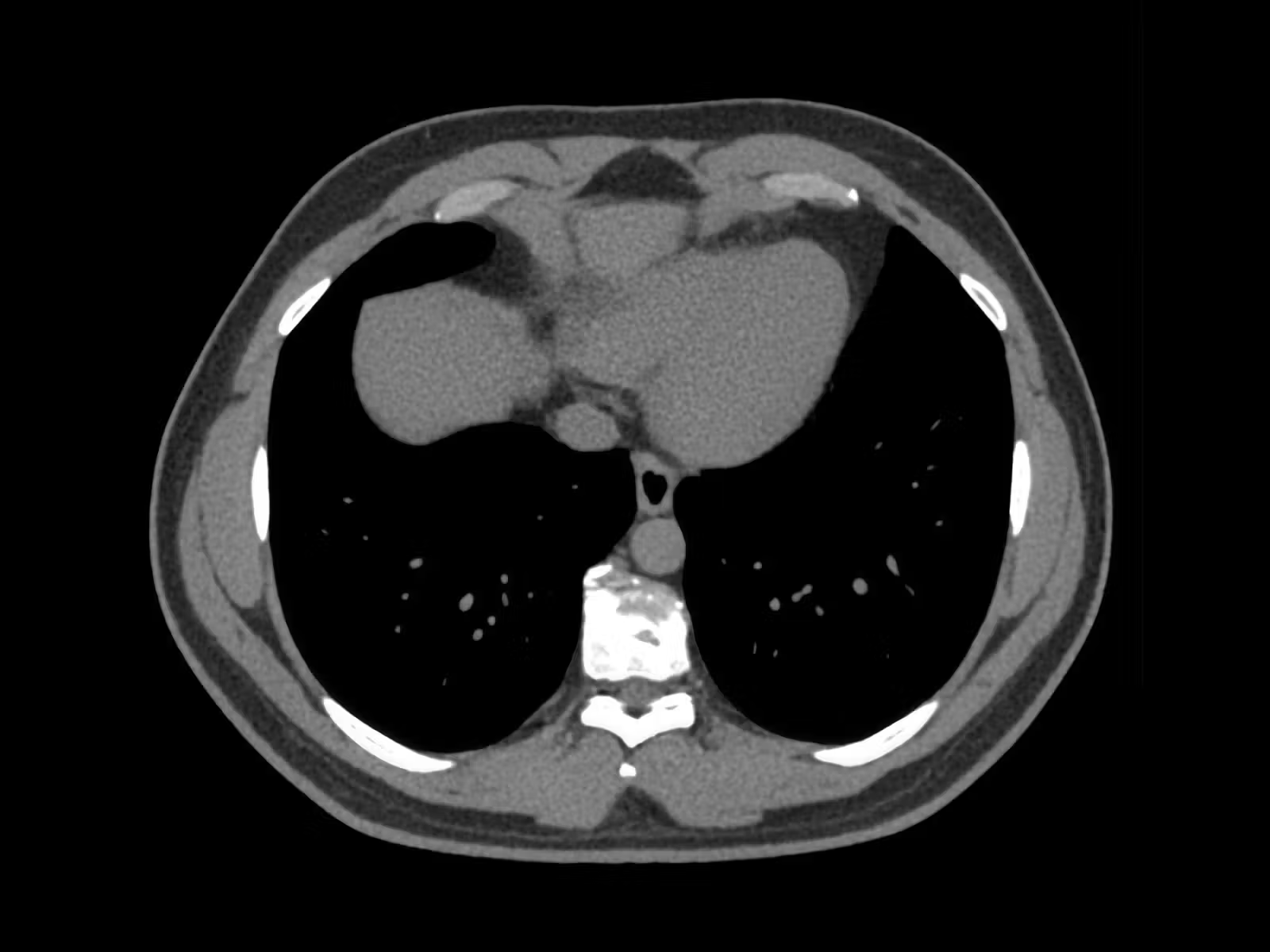
LDCT uses X-rays taken from multiple angles to create layered images of your lungs and the surrounding chest structures. The images are reconstructed digitally, giving radiologists a detailed view of lung tissue, airways, and potential structural abnormalities that may be present.
The "low-dose" element is significant. Compared to a standard CT, LDCT uses much less ionizing radiation, a key consideration for annual screening. Protocols are specifically calibrated to balance image quality against radiation exposure, making them more suitable for repeat annual use for those eligible.
LDCT requires no contrast dye, no preparation, and no recovery time. You lie still in the scanner for a few minutes while images are captured. A board-certified radiologist then reviews the images and produces a written report of findings.
Who qualifies for lung CT screening
The USPSTF recommends annual LDCT screening for adults who meet all three of the following criteria:
- Ages 50 to 80
- A 20 pack-year or more smoking history
- Currently smoking, or quit within the past 15 years
A pack-year is calculated by multiplying the number of packs smoked per day by the number of years smoked, so 1 pack a day for 20 years equals 20 pack-years, and 2 packs a day for 10 years also equals 20 pack-years.
It's worth understanding why this guidance is specific to lung cancer. For most cancer types, there's currently no imaging-based screening approach that the USPSTF recommends for asymptomatic individuals. Not because imaging isn't useful, but because the evidence base required to justify population-level screening is high. Lung cancer is an exception. Both the National Lung Screening Trial (NLST) and the NELSON trial, large, randomised controlled trials, demonstrated that annual LDCT screening in high-risk adults reduced lung cancer mortality compared to chest X-ray or no screening, respectively. That evidence informed USPSTF's recommendation.
Screening is designed for people with no current symptoms. If you have symptoms such as a persistent cough, unexplained weight loss, or coughing up blood, you should see your doctor instead.
Why early detection changes outcomes

Lung cancer is the leading cause of cancer-related death in the US, responsible for more deaths each year than colorectal and prostate cancers combined. A large part of that burden comes down to timing. The majority of cases are found at an advanced stage, when the cancer has spread beyond the lung and treatment options are more limited.
When lung cancer is identified at an earlier, localized stage, surgical removal is often a viable option—and survival rates reflect that difference. Late-stage disease is more likely to have spread to lymph nodes or distant organs, narrowing treatment to systemic therapies such as chemotherapy, targeted therapy, or immunotherapy.
Annual LDCT screening in eligible high-risk adults has been shown in clinical trials to reduce lung cancer mortality—not by preventing the disease, but by shifting the point of detection to a stage where more can be done.
The cost and access reality
Lung CT screening is still underused, even among people who meet the criteria. Cost is one of the many reasons. And when people don't have symptoms or when they don't know what they're eligible for, they report being less likely to go.
Access is another challenge. People in rural or underserved areas may have to travel significant distances to reach imaging facilities.
Function is on a mission to help make imaging more accessible. Eligible people can access a ~3-minute Lungs CT for $399 at 200+ locations nationwide.
Awareness: Most eligible people aren't getting screened
Lung CT screening among eligible adults remains low. A major reason is awareness: Many people who meet the USPSTF criteria simply don't know that screening exists, or don't know they qualify.
Some people may also avoid screening because they don't want to know or have a fear of procedures. But what the evidence consistently shows is that finding lung cancer earlier—when more can be done—can reduce lung cancer mortality.
How lab testing and imaging fit in
Function members get access to 160+ lab tests every year—covering markers across heart health, hormones, inflammation, thyroid, kidneys, liver, environmental toxins, and more. Lab tests don't screen for lung cancer the way LDCT does, but they can surface other signals worth knowing about.
Eligible Function members can also access the Lungs CT, a low-dose CT that can help detect signs of lung cancer, lung nodules or masses, emphysema, and other lung or airway abnormalities. It's another way to check your health and to know more, sooner.