At a glance
-
Cancer stage dramatically shapes treatment options and survival odds.
-
Most cancers are still found via symptoms, incidental findings, or a limited set of screening tests.
-
Advanced labs and imaging can help bridge gaps where population screening doesn't exist.
The stage at which cancer is found can change everything. When it's found early, people often live longer and have more treatment options.
Across cancers like breast, colorectal, and lung, 5-year survival tends to be much higher at Stage 1 than at Stage 4. While you can't control everything, you can choose to know more about your body, with tools like advanced lab tests and imaging.
The difference a stage can make
Cancer stage is one of the clearest ways doctors describe how far cancer has grown or spread in your body.
In broad terms:
- Stage 1 (also known as localized) usually means a small tumor that has not grown deeply into nearby tissue or spread to lymph nodes.
- Stage 2 and Stage 3 (also known as regional) usually mean larger tumors and/or spread to nearby lymph nodes.
- Stage 4 usually means the cancer has spread to distant organs (known as metastasis).
Because early-stage cancers are typically smaller and localized, treatments such as surgery or localized radiation are more likely to control or remove them.
By the time cancer reaches Stage 4, it has often spread to other parts of the body, which makes it harder to treat and usually lowers survival.
What the numbers say
The exact outlook depends on the type of cancer, but the pattern is similar across many of the most common cancers:
- Breast cancer: around 100% 5-year survival at early stage vs around 33% at advanced stage
- Colorectal cancer: around 91% at early stage vs around 17% at advanced stage
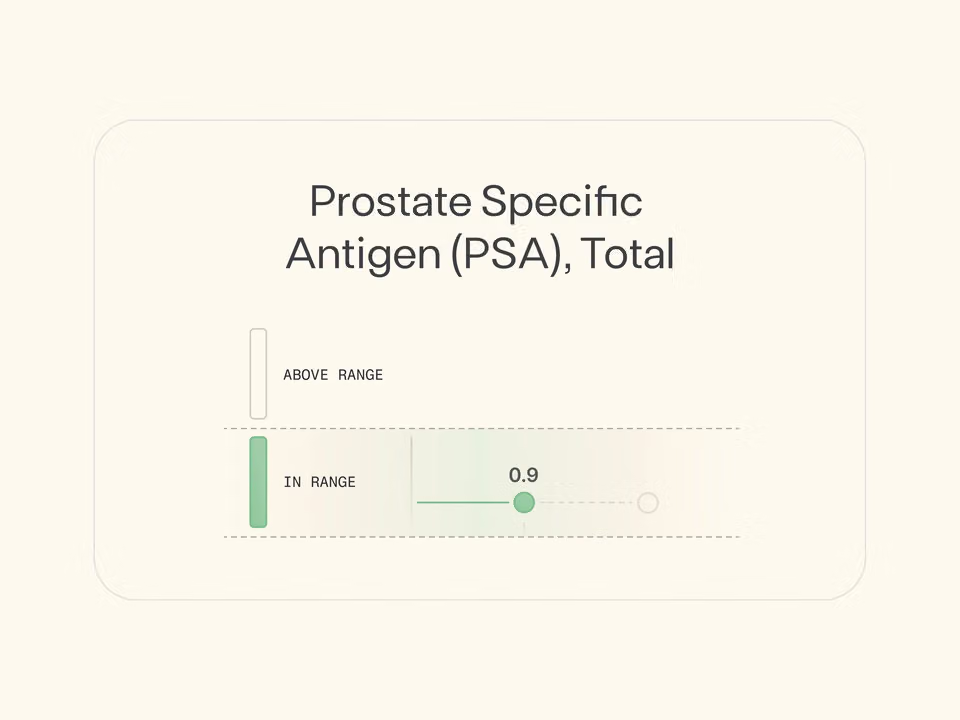
- Prostate cancer: around 100% at early stage vs around 40% at advanced stage
- Lung cancer: around 66% at early stage vs around 11% at advanced stage
These numbers are averages, not guarantees for any one person, but they can help you to understand the likelihood of successful treatment.
How cancers are usually found today
Right now, most cancers are found in a few ways:
- Guideline-based screening tests, such as mammograms, Pap tests, and colonoscopies.
- Imaging or tests ordered because of a symptom, like a new cough, weight loss, or pain.
- Incidental findings—something abnormal that shows up on imaging or lab tests done for a different reason.
Screening tests are key tools for early cancer detection. But only a minority of cancers today are caught this way. This means many are still found later, when symptoms appear. This is partly because only a limited number of cancers have verified screening tests, such as mammograms for breast cancer, Pap smears for cervical cancer, colonoscopies for colorectal cancer, and low-dose CT for lung cancer.
Getting routine, advanced lab tests and imaging, like those offered through Function, can help bridge this gap.
Where imaging can help — and where it can't
What imaging does well
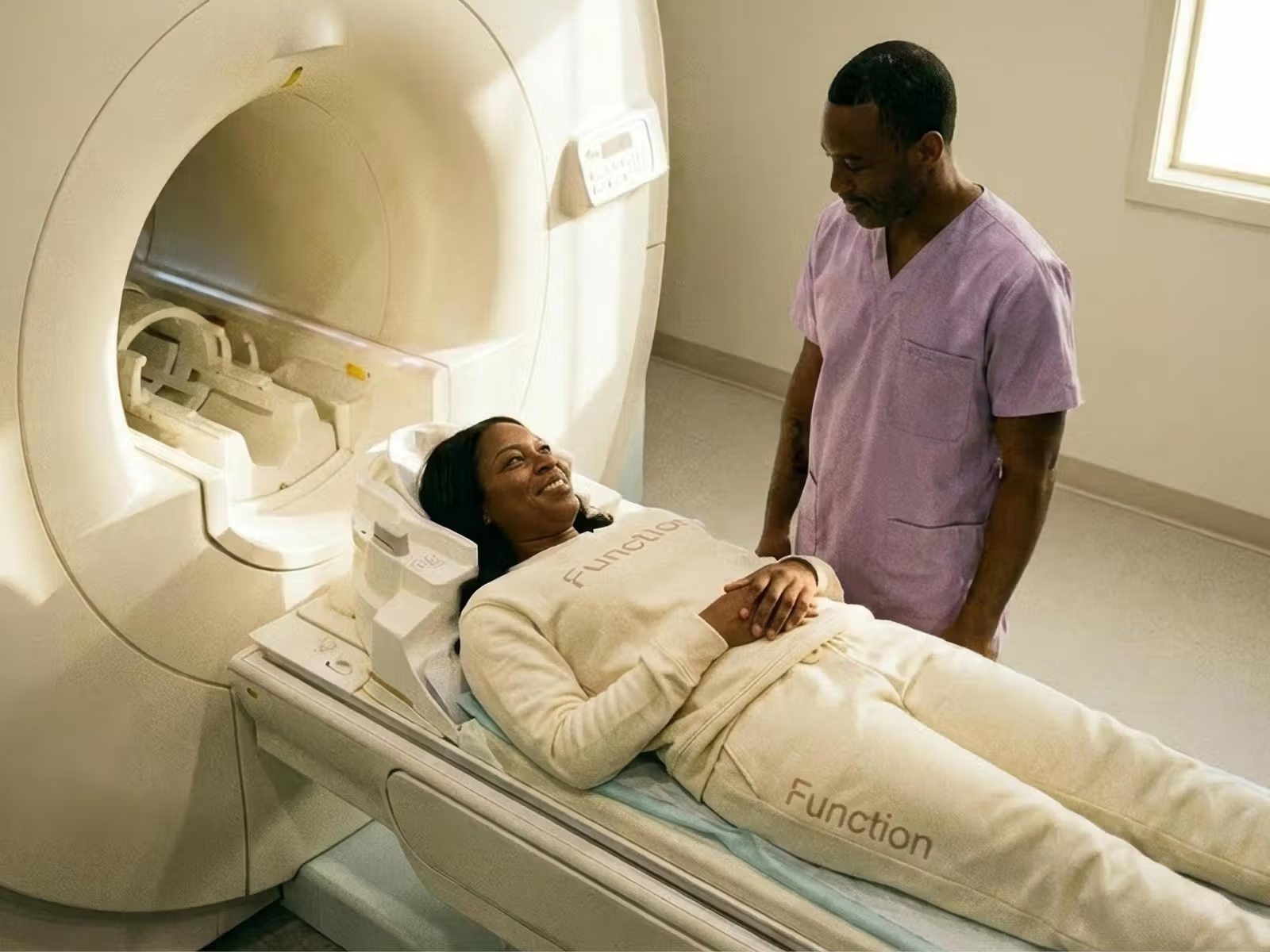
MRI and CT play a specific role in early cancer detection: They can give a detailed look inside your body, including your organs, tissues, blood vessels, and bones, and reveal changes that may signal tumors before symptoms appear. MRI uses magnetic fields and radio waves to create detailed images without ionizing radiation, while CT uses X-rays to generate cross-sectional views of the body.
Where the evidence is strongest
Some imaging tests have strong evidence. In high-risk groups, checking for lung cancer with low-dose CT has been shown to reduce lung cancer mortality by finding it at earlier, more treatable stages. In other organs, MRI can show masses, abnormal tissue, or other suspicious changes that may warrant targeted follow-up testing.
Why follow-up matters
Not every imaging abnormality is cancer. Imaging tests can detect incidental findings—such as cysts, nodules, or benign structural changes—that are common and often harmless. Because imaging alone can't always determine the nature of a finding, suspicious or unclear results may require additional evaluation, such as an ultrasound, a contrast-enhanced imaging study, or a biopsy. The findings should always be interpreted in the full context of a person's symptoms, health history, risk factors, and other test results.
What advanced lab testing adds
Advanced lab testing adds a different kind of information. It looks for signals in blood and urine that may reflect the presence of cancer, cancer-related processes, or risk patterns.
Some tests look for broad patterns, such as inflammation, immune changes, metabolic disruption, or hormone abnormalities. Others are more cancer-specific, including blood tests that look for circulating tumor DNA or other cancer-associated signals across multiple cancer types.
What you can control
You can't control whether you will ever face a cancer diagnosis, but you can control how much you know about your health. One way is to keep up with recommended screening tests for your age, sex, and risk factors. Check with your doctor to learn about your eligibility. Through Function, you can also:
- Get detailed lab testing to understand your overall health, risk factors, and how your body is changing over time. Function members get access to 160+ yearly lab tests across key areas like heart health, metabolism, hormones, liver and kidney function, inflammation, and more.
- Complete your baseline with an MRI to see what's happening in your body (and consider a lung or heart CT if eligible). Function's Annual MRI* scans for signs of cancer (brain, liver, pancreas, kidneys, ovaries, prostate, and more), prior stroke, aneurysms, fatty liver, and hundreds of other conditions.
- Consider the Galleri® Multi-Cancer Test,* which looks for cancer signals across 50 types of cancer through a single blood draw.
*Available for an additional cost.